

Betonred casino Plinko game
Introduction
Plinko at Betonred casino is one of those games that looks almost too simple at first glance. There is no reel set, no payline map, no card strategy, and no complicated bonus round to learn before the first bet. I drop a ball from the top of the board, it bounces through a field of pegs, and it lands in a slot with a multiplier. That is the whole visual idea. Yet in practice, Plinko creates a very specific kind of tension that many standard best games information for Betonred Casino players do not reproduce in the same way.
That contrast is exactly why the format deserves a closer look. The interface is minimal, but the actual player experience can swing from calm and repetitive to highly volatile depending on the selected risk level, the number of rows, and the stake size. On the surface, it resembles a casual arcade board. Underneath, it is a probability-driven gambling product where variance does most of the storytelling.
For Canadian players exploring Betonred casino Plinko, the key question is not whether the game is easy to understand. It is. The real question is what that simplicity means once real money is involved. In this article, I will break down how Plinko works, why it attracts so much attention, how its rhythm differs from slots and other casino games, and what a player should realistically expect before pressing the drop button.
What Plinko is and why it draws so much attention
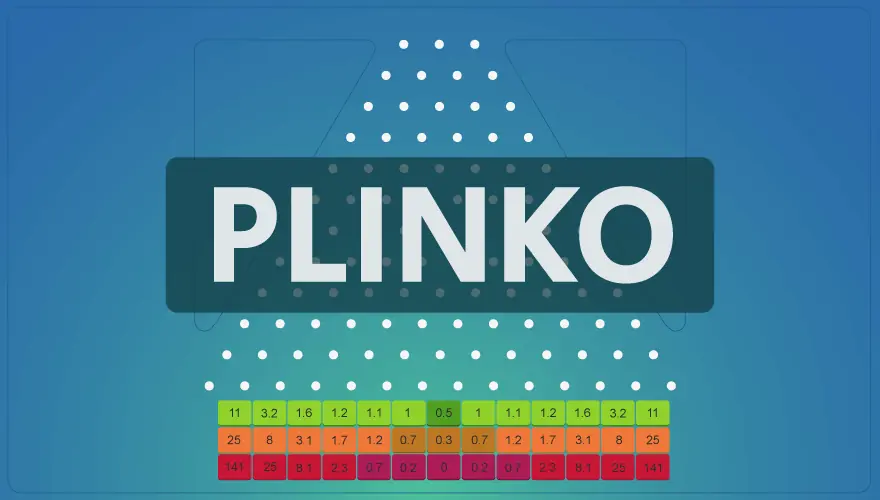
Plinko is a chance-based casino game built around one central action: a ball falls from the top of a vertical board and changes direction as it hits pegs on the way down. At the bottom, the board is divided into segments, each linked to a multiplier. Low multipliers usually sit near the center, while the biggest returns tend to appear on the far edges, where the ball reaches less often.
The reason Plinko became so noticeable is not just its visual simplicity. It is the way the game turns randomness into something visible. In a slot, the result appears as a completed spin. In roulette, the ball lands and the round ends. In Plinko, I can actually watch the uncertainty unfold step by step. Every bounce creates a tiny moment of suspense, even though the outcome is still determined by probability rather than skill.
That visual journey matters more than it may seem. Plinko feels active even when the player has no control over the path after release. The board gives the illusion of a process unfolding in real time, and that makes each result more emotionally legible. A low multiplier does not just appear; it arrives after a sequence of near-misses and directional changes. This is one of the reasons the format keeps attention so effectively.
Another point worth noting is accessibility. Many players who do not enjoy classic slot presentation still try Plinko because the game strips away most of the usual casino decoration. There are no themed symbols, no story wrapper, and often no soundtrack trying to manufacture excitement. The appeal comes from clean structure, quick rounds, and visible randomness.
How the Plinko mechanic actually works at Betonred casino
At Betonred casino, the Plinko format usually revolves around a few core settings: bet amount, risk level, and board size or row count. These options may look modest, but they shape the entire session. Before I drop anything, I am effectively choosing the game’s statistical personality.
The basic logic works like this:
I choose a stake.
I select a risk profile, often low, medium, or high.
I may also choose the number of rows, depending on the version available.
I release the ball from the top of the board.
The ball bounces left and right through the peg grid.
It lands in a bottom slot that applies a multiplier to the stake.
That is the visible part. The more important part is what these settings do behind the scenes. Risk level usually changes the multiplier distribution. On lower risk, the board tends to offer more moderate outcomes and fewer extreme jumps. On higher risk, the center can become less forgiving and edge multipliers much larger, which increases dispersion between ordinary and exceptional results.
The row count also matters. More rows mean more bounce points before the ball reaches the bottom. This can widen the distribution and make the journey feel more dramatic. It also changes how often certain multipliers appear. In simple terms, a bigger board can make the path look richer, but it can also amplify the gap between frequent small returns and rare large ones.
One of the most useful ways to understand Plinko is to separate animation from math. The ball seems to improvise its route, and visually it does. But from the player’s perspective, what matters is not the beauty of the path but the payout structure attached to the bottom slots. The pegs create suspense; the multiplier table defines the long-term behavior.
Why the pace feels so different from slots in a real session
Plinko has a distinct session rhythm. It is fast, but not in the same way as a turbo slot. A slot spin often begins and resolves as one compact event. Plinko stretches the result across a few seconds, which changes how the brain reads the round. I am not just waiting for a final symbol grid. I am tracking movement, anticipating direction changes, and reacting to each bounce.
The practical upshot is that a single session can cover far more rounds than a slot session of equal length, yet each round carries a tension that slots rarely sustain. Because every bet resolves in seconds and the controls demand little thought, the tempo stays brisk, while the visual descent of the ball gives each wager a clear arc from anticipation to outcome. That combination of quick turnover and persistent micro-drama is why players often report losing track of time here, even though the game never layers on extra features or bonus triggers. In most cases, slot sessions feel longer because the pacing is driven by slow reel spins and frequent dead spins; this format, by contrast, keeps the action constant without ever feeling rushed.
There is also a practical side to this rhythm. Because the format is so easy to repeat, bankroll can move faster than a newcomer assumes. Plinko does not always feel aggressive in the way a feature-heavy slot does, yet repeated drops can add up quickly, especially when auto mode is available. Simplicity reduces friction, and reduced friction often increases betting volume.
A memorable detail I have noticed with Plinko is this: players often remember the path of a near-edge ball more vividly than a routine profitable result. That says a lot about the game’s psychology. The tension is not only about what was paid. It is about how close the ball looked to a rare multiplier before drifting back toward the middle.
Risk levels, board logic and what they mean in practice
The most important setting in Plinko is usually the risk level. This is where the game stops being a harmless-looking drop board and starts revealing its real character. Low risk, medium risk, and high risk are not cosmetic labels. They define how concentrated or spread out the possible outcomes are.
| Setting | What it usually means | Practical effect for the player |
|---|---|---|
| Low risk | More balanced multiplier spread, fewer extreme top-end values | Results tend to feel steadier, but standout hits are usually limited |
| Medium risk | Mix of regular smaller outcomes and occasional stronger jumps | Can suit players who want movement without the harshest swings |
| High risk | Larger gap between common and rare outcomes, bigger edge multipliers | Sessions can become volatile quickly, with longer dry stretches and sudden spikes |
For many players, high risk is where Plinko becomes exciting. It is also where expectations often become distorted. The huge multipliers are visible, memorable, and easy to focus on. What is less memorable is how many average or weak results may occur before one of those edge hits appears. The board advertises possibility, but not frequency. That distinction matters. If bonuses are what you care about, withdrawal times checklist breaks down every offer currently running.
Another useful observation: the same Plinko interface can feel like two different games depending on the chosen setting. On low risk, it can resemble a repetitive probability grinder with modest fluctuations. On high risk, it can feel closer to a chase format, where the player tolerates many underwhelming drops in exchange for the chance of a sharp spike. This is why I would never describe Plinko as one uniform experience.
What players should understand about probabilities and expected outcomes
Plinko is often described as straightforward, and that is true only at the surface level. The action is easy to follow, but the result distribution deserves more respect than new players sometimes give it. The board does not reward intuition. It rewards nothing at all, because there is no skill element in the landing process once the ball is released.
What matters is probability distribution. In many Plinko versions, the central slots are hit more often than the far edges. That is not a bug or a surprise; it is built into the shape of the pathing logic. To reach an extreme side multiplier, the ball usually needs a long sequence of directional outcomes that occur less frequently than more central routes.
In practical terms, this means three things:
The largest multipliers are real, but they are not meant to appear regularly.
A string of modest or poor returns is not evidence that a big hit is “due.”
Changing risk level changes the session profile, not the existence of randomness.
This is where many players misread the game. Because Plinko shows the path, it can create a false sense that certain patterns are forming. A ball drifted left several times in a row, so maybe the next one will go right. Or several center landings happened, so maybe the edge is coming. That is not a reliable way to think about the game. The visual sequence is seductive, but it does not create a predictive model.
A second memorable observation is that Plinko can feel “fairer” than slots simply because the randomness is visible. I understand why players say this, but it is more about perception than advantage. Seeing the bounce path does not reduce variance. It only makes variance easier to watch. To understand the wagering rules behind each offer, open Betonred Casino bingo for Canadian players next.
How Plinko compares with classic slots and other casino games
When I compare Betonred casino Plinko with classic video slots, the biggest difference is structural. Slots are built around layered systems: reels, symbol weighting, paylines or ways, special icons, feature triggers, and often bonus rounds that reshape the payout cycle. Plinko strips all of that down to one event and one result table.
That simplicity changes the player relationship with the game:
| Format | Main source of engagement | What the player tracks | Typical session feel |
|---|---|---|---|
| Plinko | Visible descent and multiplier landing | Risk level, board shape, outcome distribution | Clean, fast, suspenseful in short bursts |
| Classic slots | Reel combinations, features, bonus rounds | Symbols, triggers, hit frequency, feature potential | More layered, often theme-driven |
| Roulette | Single final landing result | Bet type, wheel outcome | Direct, cyclical, table-oriented |
| Crash-style games | Cash-out timing | Exit point and timing pressure | More interactive, more decision-based |
Compared with roulette, Plinko offers a more animated route to the result. Compared with crash games checklist, it removes the timing decision and leaves everything to the drop. Compared with slots, it removes theme complexity and bonus anticipation, replacing them with pure distribution tension.
This makes Plinko a better fit for some players and a poor fit for others. If someone enjoys long-form slot sessions with expanding mechanics and feature hunts, Plinko may feel too bare. If someone prefers immediate understanding and short rounds without learning a paytable, Plinko can be a much cleaner experience.
What keeps the game interesting beyond its simple interface
The main reason Plinko stays engaging is that it compresses uncertainty into a format that is easy to read. I do not need to decode symbol values or wait for a feature trigger. Every drop contains the full cycle of anticipation and resolution. That efficiency is powerful.
There is also a subtle psychological hook in the board layout. The highest multipliers are usually visible at all times, often placed at the edges like a promise. Even when they are rarely reached, they shape how the player experiences every drop. The board is constantly reminding me what is possible, even when the actual session is dominated by more ordinary outcomes.
The third observation I would highlight is this: Plinko often creates stronger short-session intensity than many games that are objectively more complex. Complexity is not always what drives engagement. Sometimes a clean format with transparent stakes and visible outcomes produces more immediate emotional response than a heavily designed slot with multiple systems running at once.
Strengths and limitations of Betonred casino Plinko
No serious review of Plinko should treat it as universally suitable. The format has clear advantages, but it also has real limitations that become obvious after more than a few rounds.
Key strengths:
Very low learning curve. A new player can understand the basic flow almost instantly.
Fast rounds with visible suspense. The game rarely wastes time between stake and result.
Risk settings can meaningfully change the session profile.
Clean presentation appeals to players who dislike overloaded slot interfaces.
Easy to test in short sessions without studying a large paytable.
Main limitations:
Limited depth if a player wants strategy or layered progression.
High-risk mode can burn through balance faster than the calm interface suggests.
Large multipliers can dominate attention despite being infrequent.
Repetition may set in quickly for players who need feature variety.
The visible path can encourage pattern-seeking where none exists.
Set a session budget before the first ball drops and treat every drop as an independent event; the house edge applies to each round equally, so chasing a pattern only accelerates losses. A practical habit is to cap Plinko sessions at a fixed number of drops or a time limit, then step away regardless of the running total. Players who track their average multiplier across a few hundred rounds get a realistic sense of variance and can adjust stake sizes accordingly, rather than reacting to short-term streaks.
Who Plinko suits and who may prefer another format
In my view, Plinko at Betonred casino suits players who value clarity, quick rounds, and a direct relationship between stake and result. It can work well for people who want a short gambling session without learning a complex structure. It also appeals to those who enjoy watching probability unfold in a visible way rather than through reels or card draws.
It may be a weaker fit for players who want one of the following:
Deep bonus systems and evolving feature chains
Meaningful decision-making during each round
Narrative themes, audiovisual immersion, or long-form slot pacing Table game fans will get more out of this review after reading check Betonred Casino legality before registering or depositing.
A game where near misses feel less psychologically prominent
If someone is highly sensitive to bankroll swings, low-risk Plinko may still be manageable, but high-risk mode is unlikely to be comfortable for long. On the other hand, players who actively seek variance may find the format effective precisely because it removes distractions and puts all attention on the outcome spread.
I would also say this for Canadian users comparing options on Bet on red casino: Plinko is best approached as a specialist format, not as a replacement for every other casino category. It does one thing very well. It does not try to do everything.
What to check before launching a Plinko session
Before playing, I recommend paying attention to a few practical details. These are small on paper, but they shape the entire experience:
Risk level: decide whether you want steadier results or wider swings before the first drop.
Stake size: because rounds are fast, even modest bets can accumulate quickly over time.
Board settings: if row count is adjustable, understand that it changes distribution behavior, not just visuals.
Session goal: know whether you are testing the format, playing casually, or intentionally chasing high variance.
Auto-play discipline: convenience can reduce awareness of how quickly the balance is moving.
If a demo version is available, it is worth trying not because it reveals secrets, but because it helps calibrate expectations. A short test session can show how different low and high risk actually feel in motion. That is far more useful than assuming the board’s simple look means the experience will be mild.
Final verdict on Betonred casino Plinko
Betonred casino Plinko offers a focused gambling experience built on visible randomness, fast resolution, and adjustable variance. Its biggest strength is not novelty alone. It is the way the game turns a very simple action into a clear, tense, and highly readable session format. I can understand it in seconds, but I still need to respect what the math is doing underneath.
The game is strongest when viewed honestly. Plinko is not a strategic challenge, and it is not a feature-rich substitute for classic slots. What it provides is a clean probability-driven experience where risk settings dramatically affect the mood of play. For some players, that directness is the entire appeal. For others, it will feel too repetitive or too dependent on variance to hold attention for long.
If I had to sum it up in practical terms, I would say this: Plinko is worth trying if you want a fast, transparent, visually engaging format with clear stakes and no unnecessary layers. Caution is needed when moving into higher-risk settings, because the calm interface can hide how sharp the swings really are. Players who like compact tension and visible outcome paths may enjoy it a great deal. Players who want strategy, deep progression, or broad feature variety will probably be better served elsewhere.
That is the real value of Plinko at Betonred casino. It knows exactly what it is. The important part is making sure you know that too before the first ball drops.
FAQ
What does Plinko gameplay involve before each ball drop?
A Plinko round starts when a ball is released from the selected drop point and falls through pegs into numbered slots. The slot where it lands determines the multiplier for that round.